Colorado Dog Registration Information
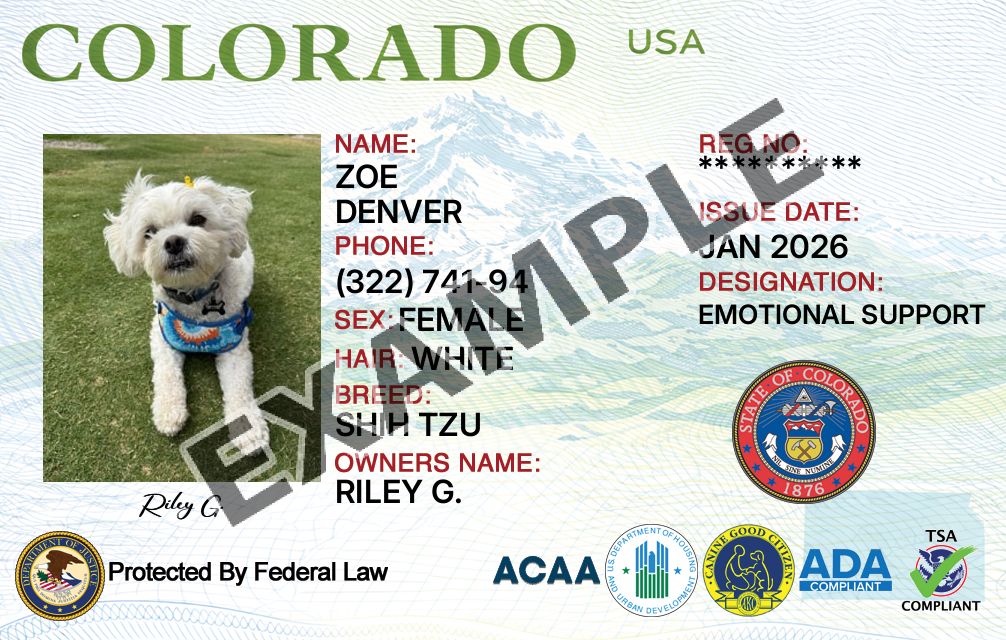
State Licensed, Service Dogs and Emotional Support Dogs in Colorado
Where Do I Register My Dog in Colorado for a Service Dog or Emotional Support Dog?
If you’re searching for where do I register my dog in Colorado for my service dog or emotional support dog, the most important thing to know is this: in Colorado, there usually isn’t a single statewide “service dog” or “emotional support dog” registration. What most people actually need is a dog license in Colorado (sometimes called a city or county pet license), which is typically enforced by local animal control, local government, or agencies involved in rabies enforcement.
In other words, when people ask where to register a dog in Colorado, the answer is almost always: with your city or county’s licensing authority (often animal services, animal control, a municipal shelter, or a partner organization acting on behalf of the local government). Your dog’s status as a service dog or an emotional support animal (ESA) is a separate legal topic from licensing, even though service dogs and ESAs still generally must follow public health rules like rabies vaccination.
Where to Register or License Your Dog in Colorado
Because licensing and enforcement are usually local, you’ll typically register (license) your dog through a city animal control program, municipal shelter, or a county partner that administers licensing and rabies-related compliance. Below are several examples of official offices (or official local partners) in Colorado that handle animal services and/or licensing in their jurisdictions.
City and County of Denver — Denver Animal Shelter / Denver Animal Protection
Address: 1241 W. Bayaud Ave.
City/State/ZIP: Denver, CO 80223
Phone (Dispatch): 720-913-2080
Phone (General): 3-1-1 (Denver) or 720-913-1311 (outside Denver)
Public-facing hours (Adoptions / Lost & Found):
- Monday / Wednesday / Friday: 11:00 a.m. – 6:30 p.m.
- Tuesday / Thursday: 12:30 p.m. – 6:30 p.m.
- Saturday: 9:00 a.m. – 4:30 p.m. (Adoptions), 11:00 a.m. – 4:30 p.m. (Lost & Found)
- Sunday: 9:00 a.m. – 4:30 p.m. (Adoptions), 11:00 a.m. – 4:30 p.m. (Lost & Found)
Note: Licensing questions are typically handled through Denver’s general inquiry options.
City of Boulder — Animal Protection (Dog Licensing)
In-person licensing location: Humane Society of Boulder Valley Veterinary Clinic
Address: 2323 55th Street
City/State: Boulder, CO
Phone: 303-441-1874
Additional in-person option (appointment only):
Location: Boulder Police Department
Address: 1805 33rd Street, Boulder, CO
Hours and email were not listed on the referenced official page; call for current appointment availability and office hours.
Jefferson County Area — Foothills Animal Shelter (Pet Licensing Program Partner)
Address: 580 McIntyre Street
City/State/ZIP: Golden, CO 80401
Phone: 303-278-7575
Email: license@fas4pets.org
Office hours: Open daily, 10:00 a.m. – 5:00 p.m.
This licensing program is described as a partnership with local animal control/management agencies in participating jurisdictions.
El Paso County (Colorado Springs Area) — Humane Society of the Pikes Peak Region (Animal Law Enforcement / Licensing)
Animal Law Enforcement address: 630 Abbot Lane
City/State/ZIP: Colorado Springs, CO 80905
Phone (Dispatch): 719-302-8798
Email (Animal Law Enforcement): animalcontrol@hsppr.org
Office hours (vary by season):
- Summer (April–October): Mon–Sat 8:00 a.m. – 9:00 p.m.; Sun 8:00 a.m. – 6:00 p.m.
- Winter (November–March): Mon–Sat 8:00 a.m. – 7:00 p.m.; Sun 8:00 a.m. – 6:00 p.m.
If you’re unsure whether your city area within the county requires licensing, call and confirm based on your exact address.
Overview of Dog Licensing in Colorado
What a “dog license in Colorado” usually means
A dog license in Colorado is typically a local registration issued by your city or county (or an authorized local program) that connects you to your dog through a tag number and a record. The purpose is practical and public-safety focused: it helps reunite lost dogs with their families, supports animal services, and helps local authorities confirm vaccination compliance when needed.
Is there a statewide Colorado dog license?
Colorado does not function like some states that have a single statewide dog licensing system for every resident. Instead, most licensing is handled locally. That’s why the correct answer to where to register a dog in Colorado depends on your exact address (city limits vs. unincorporated county areas can matter).
Rabies vaccination is a key requirement (and often the proof you’ll be asked for)
In many Colorado jurisdictions, you can’t license your dog without showing proof of a current rabies vaccination. Colorado public health guidance emphasizes vaccinating dogs (and other domestic mammals like cats and ferrets) against rabies, and local animal control is commonly involved when rabies-related incidents occur. Rabies is a fatal disease once symptoms appear, so local governments take vaccination documentation seriously.
How Dog Licensing Works Locally in Colorado
Step 1: Identify the correct licensing authority for your address
Start by determining whether you live:
- Inside a city/town limit (often licensed by the city’s animal control/animal protection program), or
- In unincorporated county (often licensed by a county program, sheriff/animal control, or a contracted partner).
This is why two neighbors in the same metro area can have different rules. If you’re asking where do I register my dog in Colorado for my service dog or emotional support dog, the “where” is the same as it is for any dog: the local licensing office that covers your residence.
Step 2: Gather documentation (rabies certificate is the big one)
Local programs commonly require a current rabies vaccination certificate (often issued by a licensed veterinarian) before they will issue or renew a license. Some jurisdictions also offer reduced fees if your dog is spayed/neutered, which may require proof.
Step 3: Apply online, by mail, by phone, or in person (options vary)
Depending on the jurisdiction, you may be able to license:
- Online through a city/county portal or authorized program,
- By phone,
- By mail, or
- In person at an animal services office, police department, or partner location.
If you need help, call the office listed for your area and ask: “I need a dog license—what are your requirements for my address, and what proof do you need?”
Step 4: Keep the tag current and follow local animal ordinances
Many local rules require dogs to wear the current tag on a collar or harness. Renewals can be annual or multi-year depending on your jurisdiction. Even if enforcement feels rare, licensing often becomes important if your dog is found loose, involved in a bite incident, or picked up by animal control.
Service Dog Laws in Colorado
A dog license vs. service dog legal status (not the same thing)
A dog license is local registration for animal control/public health purposes. A service dog is a dog that is trained to perform tasks directly related to a person’s disability. Under federal ADA guidance, service animals are generally not required to be certified, registered, or professionally trained, and a business generally may not require documentation that the dog is registered, licensed, or certified as a service animal.
What the ADA allows staff to ask (and what they can’t ask)
In public places, when it isn’t obvious that a dog is a service animal, ADA guidance explains that staff may ask only two questions: whether the dog is a service animal required because of a disability, and what work or task the dog has been trained to perform. They generally cannot demand paperwork, ask about the disability, or require a demonstration of the task.
Colorado law: service animals and licensing fees
Colorado law includes protections for individuals with service animals and also includes language about licensing fees. While a service dog still must follow local public health rules (like rabies vaccination and local animal control ordinances), Colorado law provides that an individual with a disability who owns a service animal is exempt from certain state or local licensing fees that might otherwise apply. Because local implementations vary, you should ask your licensing office how they handle fee waivers for ADA-qualified service dogs.
Emotional Support Animal Rules in Colorado
ESA vs. service dog (different legal frameworks)
An emotional support animal (ESA) generally provides emotional support that alleviates one or more identified effects of a person’s disability, but an ESA is not the same as a service dog under the ADA. ADA guidance explains that emotional support or comfort alone (without trained task work) does not qualify a dog as a service animal for public access purposes.
Housing is where ESA rules most commonly apply
ESAs are most often addressed in the context of housing. Federal housing guidance recognizes “assistance animals,” which can include animals that provide emotional support, and explains that a person with a disability may request an assistance animal as a reasonable accommodation to a housing provider’s pet restrictions. This is separate from dog licensing: even if your landlord approves an ESA accommodation, your city/county may still require a dog license in Colorado and rabies vaccination proof.
There is no “official ESA registration” required by federal housing guidance
Many people ask where to “register” an emotional support dog. In most cases, the legal need is not an ESA registry—it’s (1) appropriate documentation for a housing accommodation request when required by law/guidance, and (2) local compliance items like animal control dog license Colorado rules and rabies vaccination.
Frequently Asked Questions
Is there a Colorado state registry for service dogs?
For public access under the ADA, service animals are generally not required to be registered, certified, or professionally trained, and businesses generally may not require documentation that a dog is registered or certified as a service animal. If someone is demanding a “state registry number” for entry, that’s a red flag—focus instead on ADA task-training requirements and appropriate behavior in public.
So where do I register my dog in Colorado if it’s a service dog or ESA?
You register (license) the dog the same way you would any dog: through your local city or county licensing authority. That’s the real answer to where to register a dog in Colorado. Service dog/ESA status is separate from the licensing record, although a service dog may qualify for a fee waiver in some places.
Do service dogs have to follow rabies vaccination rules?
Yes. ADA guidance indicates that service animals are subject to local animal control and public health requirements (including vaccination rules). Licensing offices commonly require proof of rabies vaccination when issuing a license tag.
What if I live outside city limits—who do I call?
Start with your county’s animal services/animal control information, or the sheriff/police non-emergency line if your county routes animal enforcement that way. Ask specifically: “I’m in unincorporated county—who issues dog licenses and enforces rabies compliance for my address?”
Will my dog’s vest, ID card, or online certificate work as “registration”?
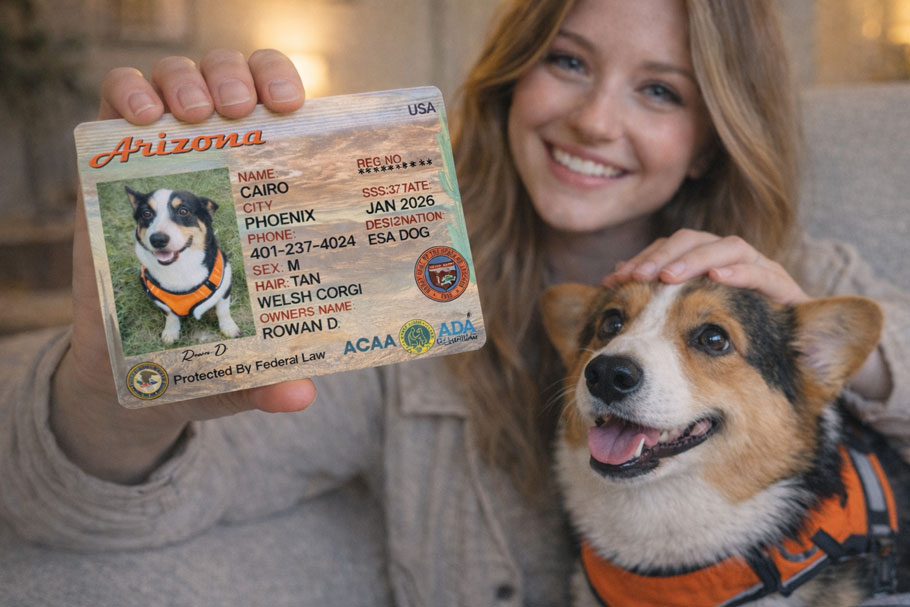
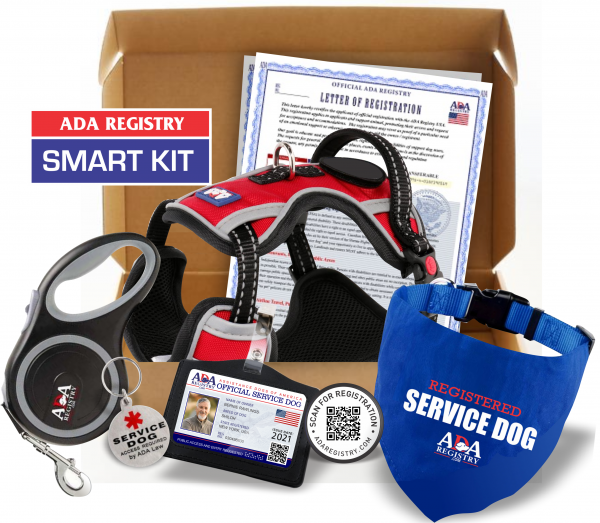
A vest or ID card may help communicate that a dog is working, but it is not the same as a local dog license record, and it generally isn’t required by the ADA. The most “official” item you’ll routinely need for licensing is usually rabies vaccination documentation and local licensing payment (if applicable).
What’s the simplest way to avoid scams when trying to license my dog?
Use your city/county’s official animal services contacts (or a known local government partner) and avoid any site that sells “registration” for a service dog or ESA as a way to create legal rights. If you’re unsure, call your local animal control/animal protection office and ask where to complete your license.
What You May Need
- rabies vaccination proof
- identification
- proof of residency
- licensing fee
Register A Dog In Other Colorado Counties
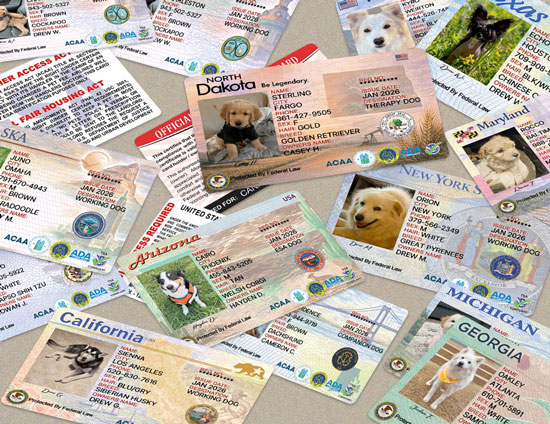
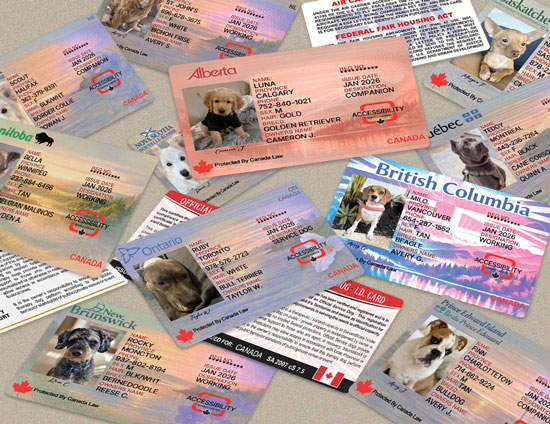
Select your county from the dropdown below to get started with your dog’s ID card. Requirements and license designs may vary by county, so choose your location to see the correct options and complete your pup’s registration.
- Adams County Dog Registration
- Alamosa County Dog Registration
- Arapahoe County Dog Registration
- Archuleta County Dog Registration
- Baca County Dog Registration
- Bent County Dog Registration
- Boulder County Dog Registration
- Broomfield County Dog Registration
- Chaffee County Dog Registration
- Cheyenne County Dog Registration
- Clear Creek County Dog Registration
- Conejos County Dog Registration
- Costilla County Dog Registration
- Crowley County Dog Registration
- Custer County Dog Registration
- Delta County Dog Registration
- Dolores County Dog Registration
- Douglas County Dog Registration
- Eagle County Dog Registration
- El Paso County Dog Registration
- Elbert County Dog Registration
- Fremont County Dog Registration
- Garfield County Dog Registration
- Gilpin County Dog Registration
- Grand County Dog Registration
- Gunnison County Dog Registration
- Hinsdale County Dog Registration
- Huerfano County Dog Registration
- Jackson County Dog Registration
- Jefferson County Dog Registration
- Kiowa County Dog Registration
- Kit Carson County Dog Registration
- La Plata County Dog Registration
- Lake County Dog Registration
- Larimer County Dog Registration
- Las Animas County Dog Registration
- Lincoln County Dog Registration
- Logan County Dog Registration
- Mesa County Dog Registration
- Mineral County Dog Registration
- Moffat County Dog Registration
- Montezuma County Dog Registration
- Montrose County Dog Registration
- Morgan County Dog Registration
- Otero County Dog Registration
- Ouray County Dog Registration
- Park County Dog Registration
- Phillips County Dog Registration
- Pitkin County Dog Registration
- Prowers County Dog Registration
- Pueblo County Dog Registration
- Rio Blanco County Dog Registration
- Rio Gande County Dog Registration
- Routt County Dog Registration
- Saguache County Dog Registration
- San Juan County Dog Registration
- San Miguel County Dog Registration
- Sedgwick County Dog Registration
- Summit County Dog Registration
- Teller County Dog Registration
- Washington County Dog Registration
- Weld County Dog Registration
- Yuma County Dog Registration